
NIST 800-88 Data Sanitization, Explained
NIST Special Publication 800-88 is the federal standard for media sanitization — the authoritative answer to the question “how do I make sure data is really gone?” Here's what it means in practice.
The three sanitization levels
NIST 800-88 defines three categories of media sanitization, escalating in strength based on how sensitive the data is and whether the media will be reused.
- Clear — overwrites data using standard read/write commands so it can't be recovered with normal tools. Suitable for reuse within an organization.
- Purge — applies stronger techniques (such as cryptographic erase or degaussing) that defeat laboratory recovery attempts. Suitable for reuse or resale.
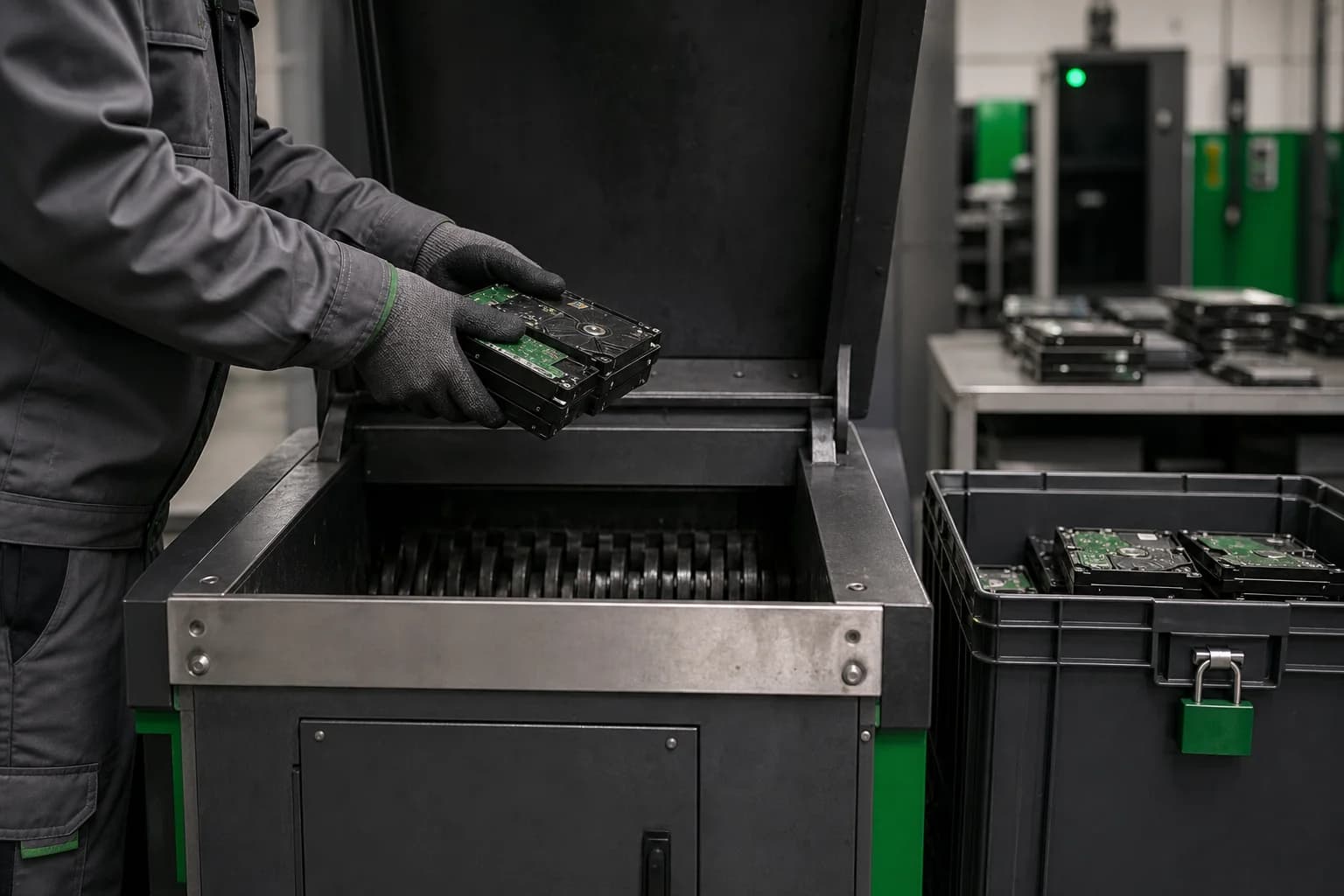
- Destroy — physically destroys the media (shredding, disintegration) so it can never be reused. The highest assurance level.
Choosing the right method
The right level depends on data sensitivity and the asset's future. Drives being redeployed internally may only need Clear; drives leaving your control for resale typically warrant Purge; and the most sensitive data — or any drive with no resale value — is best handled with Destroy.
A certified provider documents which method was applied to each device, giving you defensible proof of sanitization.
Why a standard matters
Pointing to NIST 800-88 turns “we wiped it” into a defensible, auditable claim. Regulators, clients, and cyber-insurers increasingly expect data destruction to map to a recognized standard, backed by a Certificate of Destruction.
Related service
Secure Data Destruction
Audit-ready erasure and physical destruction that eliminates breach liability.
Explore Data DestructionFAQs
Is a single-pass wipe enough under NIST 800-88?
For most modern drives, yes — NIST 800-88 recognizes that a single overwrite pass is sufficient to Clear contemporary media. The key is verification and documentation, which a certified provider supplies.
Does deleting files or formatting a drive count?
No. Deleting or formatting leaves data recoverable. Proper sanitization requires Clear, Purge, or Destroy methods as defined by NIST 800-88.